Akron, Ohio. 1935.

Bill and Bob's First MeetingsIt’s 1935. A man stands in the wood paneled, dimly lit hallway of an Akron hotel. The man stands there, with his hand in his pockets. The jingling of the coins against one another reminds him of his hotel bill. He does not know how he is going to pay it. He’s busted. The business he had traveled to Ohio to conduct has fallen through. One more hope; one more disappointment.

His wife, back home in New York, has been hoping that this newest opportunity would come to something, anything. In the last years, she has been working at a department store. The hours are long, and the work is hard. He has let her down again.

But she doesn’t know yet. Alone, depressed, hopeless, full of self-pity, he hears the sound of the barroom. The man looks down the hallway. From the far end, a golden light emanates from the doorway. From it he can hear the tinkling of glassware and the slightly too boisterous laughter that stems from such places.

This man has been sober for six months, but now old thoughts turned anew begin to crowd his head. They are the thoughts that after six months, maybe he could take a couple of drinks. They are the thoughts of being a foreign city and that no one knows he is an alcoholic. And maybe just maybe, he could compose himself like a gentleman. All he needs is a few moments to forget his worries, take on a new persona, and talk to a stranger as if they were long lost war buddies. Yes, a few moments is all he needs to feel normal and carefree again.

But the man does not follow his desire. He turns away, and walks slowly in the other direction towards the telephone booth. Maybe he will call his wife. And there, next to the booth, hangs a glass case with the obligatory phone numbers that one always sees but never calls. Listed are the police department and hospitals and clergy. Calmly, the man picks up the phone and began dialing one of the clergymen at random.

I sometimes wonder what it must have felt like to be the only person in AA.

No book. No meeting. No coffeepot.

Just one man.

In a hallway.

I question the fragility of life when so much rests on one man deciding whether to turn right or turn left.

One decision. One turn.

And I wonder of all the other people in recovery who turned the wrong way. I wonder what might have happened if they had turned the other way.

Tradition Seven: Part One

Hello Everyone,

Happy Monday! My plan for today was a post regarding the seventh tradition and how I have been long struggling with the idea of self support vs. envy, when it occurred to me that for all my thoughts regarding the seventh tradition, I have never once read it. I know, I know, so alcoholic-y of me. But have you ever read it? Because of that, I felt any discussion regarding the seventh tradition without at first reading the actual tradition was moot. Additionally, for all the self-identification I have experienced while reading Bill’s writings, he has never once made me laugh. So, today, a little variation from my usual styled post: the Seventh Tradition, straight up from the Twelve and Twelve. I hope it makes you smile. AGK
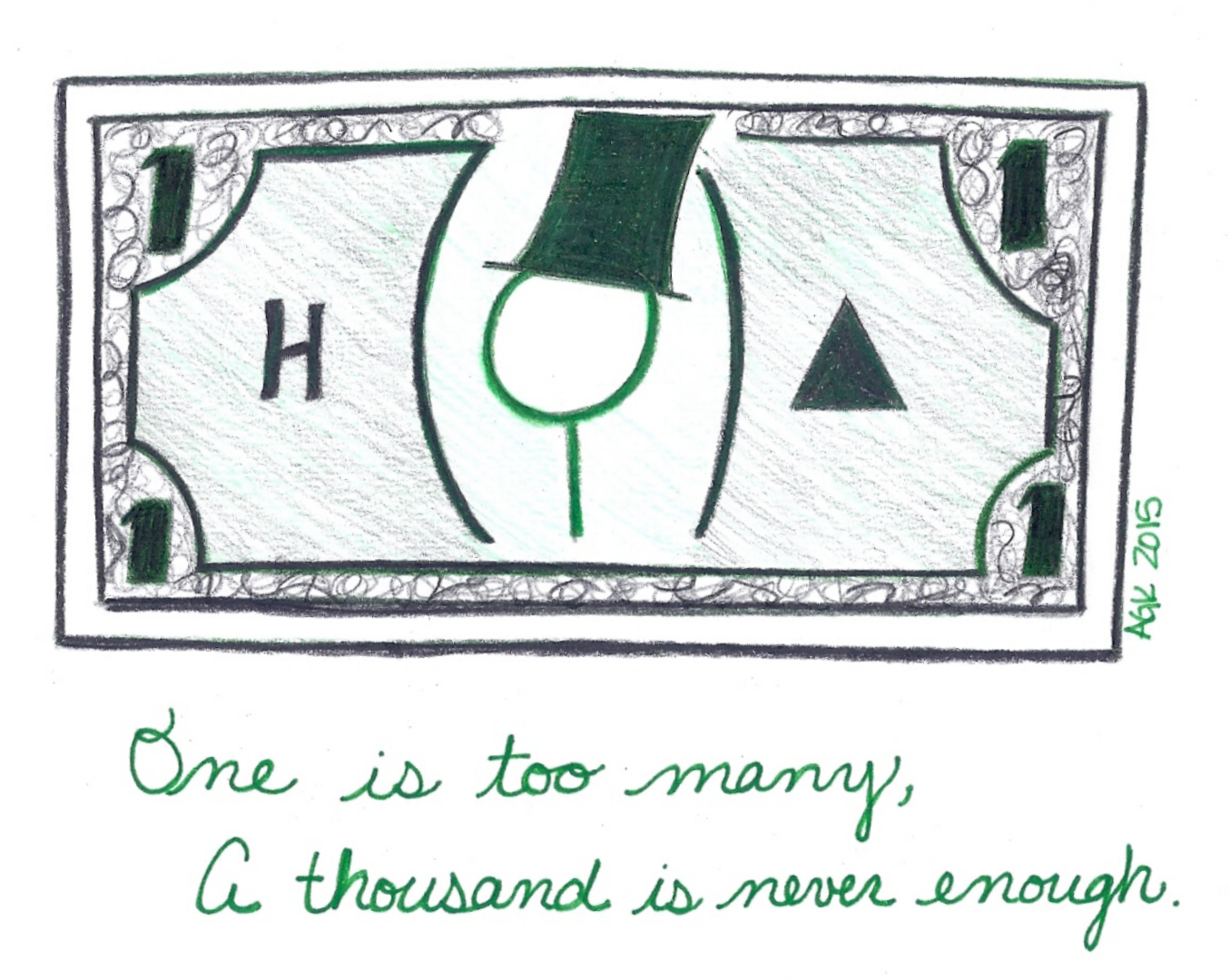
AA Dollar Bill

Tradition Seven

“Every A.A. group ought to be fully self-supporting, declining outside contributions.”

SELF-SUPPORTING alcoholics? Who ever heard of such a thing? Yet we find that’s what we have to be. This principle is telling evidence of the profound change that A.A. has wrought in all of us. Everybody knows that active alcoholics scream that they have no troubles money can’t cure. Always, we’ve had our hands out. Time out of mind we’ve been dependent upon somebody, usually money-wise. When a society composed entirely of alcoholics says it’s going to pay its bills, that’s really news.

Probably no A.A. Tradition had the labor pains this one did. In early times, we were all broke. When you add to this the habitual supposition that people ought to give money to alcoholics trying to stay sober, it can be understood why we thought we deserved a pile of folding money. What great things A.A. would be able to do with it! But oddly enough, people who had money thought otherwise. They figured that it was high time we now—sober—paid our own way. So our Fellowship stayed poor because it had to.

There was another reason for our collective poverty. It was soon apparent that while alcoholics would spend lavishly on Twelfth Step cases, they had a terrific aversion to dropping money into a meeting-place hat for group purposes. We were astounded to find that we were as tight as the bark on a tree. So A.A., the movement, started and stayed broke, while its individual members waxed prosperous.

Alcoholics are certainly all-or-nothing people. Our reactions to money prove this. As A.A. emerged from its infancy into adolescence, we swung from the idea that we needed vast sums of money to the notion that A.A. shouldn’t have any. On every lip were the words “You can’t mix A.A. and money. We shall have to separate the spiritual from the material.” We took this violent new tack because here and there members had tried to make money out of their A.A. connections, and we feared we’d be exploited. Now and then, grateful benefactors had endowed clubhouses, and as result there was sometimes outside interference in our affairs. We had been presented with a hospital, and almost immediately the donor’s son became its principal patient and would-be manager. One A.A. group was given five thousand dollars to do with what it would. The hassle over that chunk of money played havoc for years. Frightened by these complications, some groups refused to have a cent in their treasuries.

Despite these misgivings, we had to recognize the fact that A.A. had to function. Meeting places cost something. To save whole areas from turmoil, small offices had to be set up, telephones installed, and a few full-time secretaries hired. Over many protests, these things were accomplished. We saw that if they weren’t, the man coming in the door couldn’t get a break. These simple services would require small sums of money which we could and would pay ourselves. At last the pendulum stopped swinging and pointed straight at Tradition Seven as it reads today.

In this connection, Bill likes to tell the following pointed story. He explains that when Jack Alexander’s Saturday Evening Post piece broke in 1941, thousands of frantic letters from distraught alcoholics and their families hit the Foundation

letterbox in New York. “Our office staff,” Bill says, “consisted of two people: one devoted secretary and myself. How could this landslide of appeals be met? We’d

have to have some more full-time help, that was sure. So we asked the A.A. groups for voluntary contributions. Would they send us a dollar a member a year? Otherwise this heartbreaking mail would have to go unanswered.

“To my surprise, the response of the groups was slow. I got mighty sore about it. Looking at this avalanche of mail one morning at the office, I paced up and down ranting how irresponsible and tightwad my fellow members were. Just then an old acquaintance stuck a tousled and aching head in the door. He was our prize slippee. I could see he had an awful hangover. Remembering some of my own, my heart filled with pity. I motioned him to my inside cubicle and produced a five-dollar bill. As my total income was thirty dollars a week at the time, this was a fairly large donation. Lois really needed the money for groceries, but that didn’t stop me. The intense relief on my friend’s face warmed my heart. I felt especially virtuous as I thought of all the ex-drunks who wouldn’t even send the Foundation a dollar apiece, and here I was gladly making a five-dollar investment to fix a hangover.

“The meeting that night was at New York’s old 24th Street Clubhouse. During the intermission, the treasurer gave a timid talk on how broke the club was. (That was in the period when you couldn’t mix money and A.A.) But finally he said it—the landlord would put us out if we didn’t pay up. He concluded his remarks by saying, ‘Now boys, please go heavier on the hat tonight, will you?’

“I heard all this quite plainly, as I was piously trying to convert a newcomer who sat next to me. The hat came in my direction, and I reached into my pocket. Still working on my prospect, I fumbled and came up with a fifty-cent piece. Somehow it looked like a very big coin. Hastily, I dropped it back and fished out a dime, which clinked thinly as I dropped it in the hat. Hats never got folding money in those days.

“Then I woke up. I who had boasted my generosity that morning was treating my own club worse than the distant alcoholics who had forgotten to send the Foundation their dollars. I realized that my five-dollar gift to the slippee was an ego-feeding proposition, bad for him and bad for me. There was a place in A.A. where spirituality and money would mix, and that was in the hat!”

There is another story about money. One night in 1948, the trustees of the Foundation were having their quarterly meeting. The agenda discussion included a very important question. A certain lady had died. When her will was read, it was discovered she had left Alcoholics Anonymous in trust with the Alcoholic Foundation a sum of ten thousand dollars. The question was: Should A.A. take the gift?

What a debate we had on that one! The Foundation was really hard up just then; the groups weren’t sending in enough for the support of the office; we had been tossing in all the book income and even that hadn’t been enough. The reserve was melting like snow in springtime. We needed that ten thousand dollars. “Maybe,” some said, “the groups will never fully support the office. We can’t let it shut down; it’s far too vital. Yes, let’s take the money. Let’s take all such donations in the future. We’re going to need them.”

Then came the opposition. They pointed out that the Foundation board already knew of a total of half a million dollars set aside for A.A. in the wills of people still alive. Heaven only knew how much there was we hadn’t heard about. If outside donations weren’t declined, absolutely cut off, then the Foundation would one day become rich. Moreover, at the slightest intimation to the general public from our trustees that we needed money, we could become immensely rich. Compared to this prospect, the ten thousand dollars under consideration wasn’t much, but like the alcoholic’s first drink it would, if taken, inevitably set up a disastrous chain reaction. Where would that land us? Whoever pays the piper is apt to call the tune, and if the A.A. Foundation obtained money from outside sources, its trustees might be tempted to run things without reference to the wishes of A.A. as a whole. Relieved of responsibility, every alcoholic would shrug and say, “Oh, the Foundation is wealthy—why should I bother?” The pressure of that fat treasury would surely tempt the board to invent all kinds of schemes to do good with such funds, and so divert A.A. from its primary purpose. The moment that happened, our Fellowship’s confidence would be shaken. The board would be isolated, and would fall under heavy attack of criticism from both A.A. and the public. These were the possibilities, pro and con.

Then our trustees wrote a bright page of A.A. history. They declared for the principle that A.A. must always stay poor. Bare running expenses plus a prudent reserve would henceforth be the Foundation’s financial policy. Difficult as it was, they officially declined that ten thousand dollars, and adopted a formal, airtight resolution that all such future gifts would be similarly declined. At that moment, we

believe, the principle of corporate poverty was firmly and finally embedded in A.A. tradition.

When these facts were printed, there was a profound reaction. To people familiar with endless drives for charitable funds, A.A. presented a strange and refreshing spectacle. Approving editorials here and abroad generated a wave of

confidence in the integrity of Alcoholics Anonymous. They pointed out that the irresponsible had become responsible, and that by making financial independence part of its tradition, Alcoholics Anonymous had revived an ideal that its era had almost forgotten.

The AA Cliché: It Works if You Work It

A couple of weeks ago, I wrote of walking down the sidewalk, thinking for myself, “Just for today.” It started me down that path of thinking about the other clichés we often find on the walls of the meetings. Anyone who has studied rhetoric for more than a couple of days can tell you that the purpose of the cliché is to wheedle its way inside the brain. Successful clichés are unforgettable, if annoying. “All’s fair in love and war,” and “The early bird gets the worm.”

AA has its own clichés, irritating on even a good day. They appear to be everywhere. “Live and let live,” “One day at a time,” and the passive-aggressive, “Keep coming back.”5 Minutes After the Miracle

I have no balance in my life today. I’ve been working too hard. I think, I am not going to drink tonight, so I afford myself another opportunity to work rather than go to a meeting. Consequently, I know my spiritual condition has taken a hit. I can’t help but sit here and be reminded, “Whatever I place first before my recovery is sure to be the first thing I lose.”

I know other clichés too. I know that “It is a spiritual axiom that every time we are disturbed, no matter what the cause, there is something wrong with us” (Twelve and Twelve 90). And I know, “We need not be discouraged when we fall into the error of our old ways, for these disciplines are not easy. We shall look for progress, not for perfection.” And I know “Faith without works is dead” (Big Book 76).

Every once and a while, I have found myself lost in thought, looking at the cliché’s on the wall. In the past, I’ve discounted them as little more than what passes for decoration in AA, but as I sit here in the moment, I have grown in appreciation over the humble cliché and its pithy outlook on recovery. So, today, I’m gonna add the cliché to the “Spiritual toolbox laid at my feet.”

As for the rest, “I’m all right, all ready,” because “Any day I go to bed sober is a good day.” And tomorrow, I’ll “Clean house, trust God and help others.” Afterall, “It works if you work it.”


What’s your favorite Cliche? Post here anonymously, on Facebook at https://www.facebook.com/AnnGKroger, or on Twitter @AnnKroger.


Will Write for Food

As always, please consider contributing to my writing fund. Even a couple of dollars will make an enormous difference. Thank you.

Donate Button with Credit Cards

I am Responsible

A little before Christmas, I wrote a post, Only God and Santa can Create AA Miracles, about a young outdoorsman who would occasion visit my homegroup. I wrote about the outdoorsman in that way that while I felt his homelessness was tragic, that is was just a matter of time before his miracle was to happen too. I can read the goodwill in my own words, that feeling of sentimentality that only comes in the night during winter.

Sometimes, though, those miracles do not come. Last week, the young outdoorsman’s body was found in a local park.

I think his death has had a serious impact on our little corner of the recovery world. I know his death has profoundly impacted me. I keep trying to think of what we could have said, what we could have done that might have averted this tragedy. I want to reach out to his family and hug them and reassure them and tell them I don’t think there was anything we could have done. And yet, in my heart I know I’m wrong. There is always more we could do.

I wrote my post in December. Now it is May, and I regret it. I regret suggesting that only God and Santa can create AA miracles because that is not good enough. It removes the responsible of the program off my shoulders and on to something/someone else. And that is not what we are taught.For That I am Responsible.

What we are taught is: I am Responsible.  When anyone, anywhere, reaches out for help, I want the hand of A.A. always to be there.  And for that:  I am responsible.

AA.org goes on to quote Bill W. “‘The first concern of AA members should be with problem drinkers the movement is still unable to reach,’ Bill said. He estimated that there are 20 million alcoholics in the world today, five million in the U.S. alone. ‘Some cannot be reached because they are not hurt enough, others because they are hurt too much,’ he declared. ‘Many sufferers have mental and emotional complications that seem to foreclose their chances. Yet it would be conservative to estimate that at any particular time there are four million alcoholics in the world who are able, ready and willing to get well if only they knew how. When we remember that in the 30 years of AA’s existence we have reached less than ten per cent of those who might have been willing to approach us, we begin to get an idea of the immensity of our task and of the responsibilities with which we will always be confronted.'”

There are only two sober high schools (Archway and Three Oaks) in all of Houston. The rate of addiction, especially in the youngest members of our society, is disastrous. Their brains are not fully developed enough to make the logical and sound choices that they might have otherwise. According to the National Institute on Drug Abuse (NIDA), “Nine percent of 8th graders, 23.5 percent of 10th graders, and 37.4 percent of 12th graders reported past-month use of alcohol… 19.4 percent reported binge drinking.” Although these numbers are lower than in previous years, they still warrant serious attention considering the US department of Health and Human services in their article, “Alcohol: A Women’s Health Issue,” states “Young people who begin drinking before the age if 15 have a 40-percent higher risk for developing alcohol abuse or alcoholism some time in their lives than those who wait until age 21 to begin drinking.”

According to HISD in the 2014-2015 school year, there were 46,559 enrolled high school students (In just HISD, not counting Spring Branch, Katy, Spring, Cy Fair, et cetera). If 23.5 percent of these 46,559 (15 being the average age for a 9th-10 grader) drank in the last month, then reason would go to show that 10,941 currently enrolled HISD high schoolers are at a higher chance of developing alcohol abuse or addiction in their later years. 11,000 students. And we have 2 sober high schools.

Yes, there’s more than we can do. We can stop stigmatizing alcohol and drug addiction as a character flaw and instead embrace the years of scientific research that show addiction as a chemical imbalance. We can stop suggesting the the asking of help is somehow a weakness, or that social services is beneath us. We can slow the funding of the criminalization of this disease and instead move funding into rehabilitation, social services, and schools. Yes, there is always more that we can do

That young outdoorsman, we failed him. Now, what are we going to do about it?

Its my responsibility. It’s your responsibility too.


Please contact your local school board about funding for local sober high schools.

Cy Fair ISD: (281) 897-4000

HISD: (713) 556-6121

Katy ISD: 281-396-6000

Spring Branch ISD:713-464-1511


I would like people to know that there is a vigil on Sunday for the outdoorsman as well as a GOFUNDME to help defray the cost of his funeral. I struggle with the concept of anonymity in this case. Ultimately, with the help of my support group, I am going to err on nondisclosure. If you would like more information, please email me. Until then.

Just for Today

Fat Hobo** So I have decided to limit my posting to Sunday night/ Monday morning, instead of twice a week. Writing has followed the path of sobriety; so much awesomenesses have come out of this post that it hard to set aside time to post anymore. For those of you who like Lydia, I have been working on her storyline. I will start posting parts of her story or simply adding new chunks under her and Henry’s pages around the beginning of June. I’ll keep you updated.**

_________________________________________

I do not know what it is about me that is never once satisfied with the suggested serving size of anything. Two Advil. One glass of red wine. One piece of dark chocolate. Driving home last night, I was thinking about 4oz of protein. The size of a deck of cards. What is that? If I ordered a steak at a restaurant and they brought me a steak the size of a deck of cards, I wouldn’t know what to make of it.

Hence, my problem.

This week, I came to a bottom. A food bottom. I was gonna say, “a new bottom,” but I have reached this particular bottom before. So, it is not so much new as, “Ahoy, I didn’t see you lurking there,” kinda food bottom. Argh!

The thing that should not be surprising, and yet surprised me none-the-less, has been how this recent admission of surrender has brought forth all the same emotions as when I first got sober. Not to the same degree, I admit. I am not trying to stop a cycle of addiction while battling homelessness and unemployment. The physical destruction of my addiction is fairly minimal. But what I am feeling, the emotional part of the decision to address my food issues, feels very familiar.

Yesterday, I was walking down the sidewalk of my apartment complex. My stomach was growling, and just like that, a torrent of thoughts and justifications flooded my brain in a milli-second’s time. Maybe I could have just a little. I could start again tomorrow. It is awkward to think about how easily these thoughts came. And a little scary. It was a reminder of the alcoholic obsession I come from and how quickly I could return.

But as quickly as these thoughts came, other thoughts followed. “One day at a time, one minute at a time.” “All right already.” And the ever irritating, “Keep coming back.”

Y’know, then I walked into the rooms of AA, I never thought it would work. I thought the steps and spirituality and all of it was just too esoteric and not concrete enough to offer anything like a real solution. But it did work. Working the steps worked. And being around other addicts worked. Talking worked and service worked. And I know, when I live my life in the spiritual realm instead of the physical realm, that works too. It doesn’t matter if it is food or drugs or alcohol. I know when I apply the steps in my life, things are bound to get better. I just have to hang on long enough for the recovery to set in.

Today, I have the gift of second thought. AA has taught me that. I do not have to act on my first impulse. I can pause long enough to remember there is a solution. And just because I want to eat or drink, does not mean I have to. Just for today.


Will Write for Food

Donate Button with Credit Cards

Running Away

Humility Car** The post today was originally set aside to be posts from others regarding alternatives to AA, but I did not receive a single email or response. It saddens me somehow. But alas, I’ll get over it. At least my sobriety is in tact. Go to a meeting. Go to another meeting. Don’t drink in between. Have a good week. **

I have an amazing life. I know this. I have a ton to be grateful for. And yet, probably not a week goes by that I do not want to raze it to the ground. Demolish it. Set it on fire with a blowtorch and simply walk away. Don’t get me wrong. I don’t want to drink. I just want to run away. I want to travel the country and see mountains and large trees and waves of grain and big skies. I want to experience the Grand Canyon.

This is not a new feeling. I have had a version of this fantasy for most of my life. When I was younger, I thought of myself as Bohemian. I remember having a personal philosophy that I would never buy anything of value that I could not fit in a suitcase. For most of my adult existence, that has remained largely true. I never really seemed to ever own anything of value. I never had a job that wasn’t like any other job out there. I never had a relationship that required much from me.

When I got sober, my lifestyle remained true to form. I lost most of my belongings during my sobering up, so the only things that were left were the very most important things of the no things to begin with. At eighteen months, I got my first apartment. I owned an air mattress and a computer precariously perched atop a box. Then I got a bed and a used sofa. And a desk… And a puppy. Its here, with the puppy, that things start to become awkward. Cause I can’t put Dio in a suitcase. I see homeless people with dogs sometimes, but they’re always kinda big, guard dog looking dogs. They’re definitely not long haired, prissy Dachshunds that prefer to be carried.

Then the family came back. That’s good. I walked away once before. I lived; they lived. But now they’re older and I’m older and I like them. They make running away more difficult. It’s not a deal breaker, but I would miss them.

And then I did what the unthinking runner does, I got the second puppy. Now, if one is going to run away, and if one ferocious attack puppy is bad enough, a second and even more skittish Maltese puppy is not the way to go. Ggggrrrrrrrr…

Okay, so it’s me and two puppies in a dented Hyundai traveling across the country. It’s tight, but they’re pretty good in the car. Dio sits in my lap. I don’t know if that’s legal. And I’m always scared to tell other dog people that is how we roll because I don’t want the doggie seatbelt lecture. Anywho, we could make do.

But the worst of it is, I fell in love. And that is no bueno for a runner. For the longest time, I thought I could leave. I threatened to leave. Convinced myself I could leave. But no. I really love him and could not imagine not seeing his beautiful face every day. Sigh.

Okay. Me, two dogs, and my man in my dented Hyundai all running away together. But my sister gave me these really awesome chairs from her living room. They’re perfect. So comfortable. The best chairs I’ve ever owned. It’s a shame to leave ‘em. So, we’ll strap them to the roof. Good. We’re all set. Me, my two dogs, and my man all running away in my dented Hyundai with two chairs strapped to the roof.

I really do not understand why a part of me is always trying to flee. I mean, I know the AA answers. I know that I am restless and discontent, that my insatiable need for more everything constantly pushes me in to a state of ingratitude, that I am “A victim of the delusion that [I] can wrest satisfaction and happiness out of this world if [I] only manage well,” (BB 61). But somehow, in this moment, the answers sound hallow. I feel like it is not enough to simply say, I feel this way because I am an alcoholic.

And yet, I have nothing else. I think it is a really awkward moment in the life of an alcoholic when they have no proper answers for why they do the things they do. Why does the guy who has everything to lose, drink anyways? Why does the girl who has already done everything she said she’d never do, continue to do it? Why do I, who finally has everything she’s always wanted, have reoccurring fantasies of walking away?

I think the baffling thing about this disease is even the people experiencing it find it hard to articulate the fears, obsessions, the frantic search for happiness in things that exist outside of our own souls. If I only go there, do that, buy this, then I will be happy.

Last night, I had a moment of pure happiness. I was here, in my living room, in one of the big over-sized chairs my sister gave me. One of the puppies was in my lap, the other not far from me. I watched as my love put away the evening dishes. And I thought: Wow, life is tremendously good. I have everything I could possibly every want. I have peace.

And I think that about the best an alcoholic can wish for. I don’t think just because one gets sober and works the steps, that life necessarily becomes easy or sane. But I do think we can occasionally have these moments of perfect serenity and calm, when everything just seems right and easy and good.

One of my very favorite AA sayings comes from a man from a local club. I heard it in one of the first meetings I ever attended and it resonated so deeply, I never forgot it. “I didn’t get in trouble every time I was drinking, but every time I was in trouble, I was drinking.”

To that, I would like to add this, “I haven’t been at peace the entire time I have been sober, but the only times I have ever felt peace, I was sober.”

Will Write for Food

Donate Button with Credit Cards

Boy Whistling in the Dark

Boy Whistling in the DarkI have decided to take a little vacation from my blog as I work a bit on Lydia. I hope you will enjoy this reprint of a post I wrote last fall. It was one of my favorites. I hope you have a great weekend. AGK

Last week, a friend of mine decided that after five years of sobriety that she was not an alcoholic after all, and if she just stay away from the drugs, she could successfully drink. Her friend, a girl with eighteen months, asked with all earnestness, “Why? After all these years?” I responded without much ado or forethought, “She wasn’t happy with her sobriety.” My answer came so smoothly, resounded with so much simplicity and wisdom, I surprised even me. I thought… Man, I’m goooooood.

Only later that evening, lying awake in bed, did I realize I was not the recovered guru I momentarily thought I was. All I did was reiterate one of my favorite passages in the Big Book. “We know our friend is like a boy whistling in the dark to keep up his spirits. He fools himself. Inwardly he would give anything to take half a dozen drinks and get away with them. He will presently try the old game again, for he isn’t happy about his sobriety” (Big Book, page 152).

I often refer back to the boy whistling in the dark. He has become a working part of my recovery, a part of my daily tenth step, a way to spot check my emotional sobriety. Am I, today, a girl whistling in the dark? If I could have half a dozen drinks and get away with it, would I?

Some days, the answer comes a bit slower. I have to think deeper. What does that mean, half a dozen drinks? Does that mean just once? One time, I get half a dozen drinks? What if I want seven or ten or a baker’s dozen? Do shots count? And then I have to smile. My alcoholism is so deeply rooted inside me that if I were to take half a dozen drinks, I would want more, more and more often. I know this. I’m so alcoholic that even in my hypothetical world, I am trying to nudge my way into more.

The reason I do not take half a dozen drinks has nothing to do with whether or not I would get away with it. I certainly didn’t care too much about getting into trouble when I was drinking. And I think that those closest to me can attest that sobriety has done little to damper my defiance.

For years, I wanted my brain to shut off. To be quiet. To stop the harassment that existed in my own mind. It felt like a whirlwind of hate and disgust. I used drinking to accomplish this end. Then one day, my drinking quit quieting the voices and instead added to it. My inability to exist within my own body perpetuated and exacerbated the cesspool which was my mind. With the vicious nature of this circular thinking, I find it a miracle that anyone stops drinking even for five minutes.

I do not take half a dozen drinks because I do not want to have to spend my life trying to figure out how to get the next half dozen. The question is not, could I outwit and shuck and jive my way back to inebriation, the questions is why would I ever want to? The consequence of not half a dozen drinks, but of the very first sip of the very first one, is the madness of my own mind slamming into me with the force of a bulldozer. I am confident about this. The alternative to sobriety is insanity.

So, tonight, as I lay my head down on my pillow, I will know I am not the boy whistling in the dark inwardly hoping to take half a dozen drinks. I am the girl whistling in the sunlight of the spirit as she trudges down the road of happy destinies. May God bless me and keep me until then.

Donate Button with Credit Cards

Another Day, Another Dollar

Will Write for FoodEver since high school, from the moment I understood I had no one with whom I could confide in except the written page, I wanted to be a writer. Over time, I grew confident in my ability. I knew I had it within me. My problem was I also had burgeoning alcoholism in me too.

The disease of alcoholism is rich in complexity. It pulls us from under while supplying us with visions of glory. It destroys dreams while simultaneously building up the nothingness of accomplishment. It was in this fog that I practice my craft. I spent many years writing my nights away. All those pages, though, were nothing more than laments on my dissatisfaction with life, a young girl’s struggle for place. It never amounted to anything more than a binder full of drunken, self-pitying ramblings not worthy of reading.

Ironically, when I finally got sober, I found I could not write. The mere thought of writing made my mouth water. If I sat down at the keyboard, I found my hand involuntarily reaching for the tumbler of vodka that was not there. The sensation was so upsetting, I eventually turned off the computer for good and walked away. I thought that if a sacrifice of sobriety was that I could not write, then that was a price I was willing to pay. After all, neither the writing nor the drinking had ever amounted to anything of value.

It would be years before I wrote again.

Last year, I found I was still claustrophobic with fear. I had a dream, but I lacked the courage to follow that dream. I feared my writing was nothing more than alcohol induced delusions. I feared that even if I did write, no one would read it. I feared that if they did read it, people would not like it. I thought I would suffer backlash from my job, from my students, and yes, from AAs for breaking my anonymity.

What I learned was that my fears were largely unfounded. I learned that most people, maybe out of sheer respect for the human condition, are really quite kind to those who try. Negative criticism has been rare, while positive support has been vocal. Additionally, my AA community has really embraced my blog. One alcoholic friend recently told me that while her and my beliefs are on opposite side of the faith spectrum, my interpretation of the Big Book was worthy of being read. And then there was the day when one of my high school students came up to me after class and told me he found my blog. As my eyes filled with tears, he whispered, “You are helping people.”

And now, my yearlong experiment in myself is drawing to a close. For some time, I have been contemplating what my next steps should be. But in my heart, I know. I am ready to suffer the criticism of professionals. It is time to take a deep breath and send my stories out into the world.

So… it is with a trepidation that I have decided to pass the metaphorical hobo hat; I’ve decided to add a place to make donations to my blog via PayPal. I realize the potential non-existence that could easily occur as a result of asking alcoholics to part with their money, but I figured it is worth a shot. If I have learned nothing else, I have learned what can happen when I simply have the humility to ask. My hope is that with enough small donations, I will be support myself long enough to begin piecing Lydia into an actual collection of short stories or maybe even a novel.

If you have read my blog over the past year and liked it (or even if you didn’t like it, but you read it anyways) maybe you could consider tipping the author a dollar or two or ten. I would really appreciate it.

Thank you,

AGK

Donate Button with Credit Cards

P.S. Even if you don’t contribute, I hope you still will continue to read and comment. It makes me happy.

P.P.S. If you make a donation or twenty dollars or more and let me know through email (agkroger@gmail.com) or on Facebook, I’ll draw you in hobo form and mail it to you. (Or if you live in Houston and are one of the ones who clamor for it, I will make you a jar of my green salsa.)

Alcoholics Anonymous: We Surely have no Monopoly

Recovery Options“Love and tolerance of others is our code” (Big Book 84).

I am not a very lovely and tolerant person. I’m just not. I try my darnedest, but… no. Quiet, though, I have improved upon. Pausing when agitated. Walking away. Not engaging. This morning, though, I woke up to yet another email explaining to me the fallibility of AA. Ugh. When I posted last week that this conversation bores me, a man called me a coward. He said that since his opinion differed with mine, I was scared to acknowledge him. Nothing could be further from the truth. I am sorry he feels spurned or neglected or failed or whatever it is by AA. I know such feelings exist. I just… I don’t know what to say about it.

I know there is a lot of hostility towards AA out there. And I know some people feel the need to express their dissatisfaction, but let me set something straight, once and for all. This is my blog. I write it. I draw the pictures. Its about my life, my perceptions, my recovery. I make no bones about it. I’ve have my reasons for breaking my anonymity. I wrote about them in in my post Part Three: Why I Write about my Alcoholism: (https://annkroger.com/2014/09/26/part-three-why-i-write-about-my-alcoholism/) But this, this is not a Celebrate Recovery blog. It is not a SMART Recovery Blog. This is not by the sheer force of willpower blog. And I do not feel in the spirit of equanimity that I have to give equal time to any of them because my blog is not about the many forms of recovery from alcohol and drug addiction. It’s about my recovery from alcohol and drug addiction. And I’ve chosen AA.

With that said, I have never once said any other approach does not work. I never would. I have no basis on which to judge anything. I have not looked into them. I do not know what their methods are. I do not know what they teach. I’m not a coward; I’m just busy. I have two jobs, two dogs, this blog, my art, a family, a wedding to plan, and a fiancé who just had open-heart surgery. I have neither the time nor the interest to participate in a discussion that affects my life in no way whatsoever.

Furthermore, I find it odd that anyone would even engage in that discussion. The Big Book tells us, “In all probability, we shall never be able to touch more than a fair fraction of the alcohol problem in all its ramifications. Upon therapy for the alcoholic himself, we surely have no monopoly,” (xxi). I have a more than a couple friends in Celebrate Recovery. I have friends in SMART recovery. I, as well as most of my friends, engage or have engaged in some form of therapy/ psychoanalysis. Many AAs are on some kind of medication for anxiety or depression or any number of things. AA says some of us may need outside help. It encourages hospitalization when needed.

Well… the sun is nice and high. I’ve had a cup of coffee. Writing this has cleared my mind and my mood has drastically improved. So, here is what we’ll do. I will make a one-time offer. If you send me an email at agkroger@gmail.com summarizing your program of recovery, regardless of what it is, I will post it. Explain the program’s advantages or why you like it. Whatever you want. I would prefer it if you did not criticize other programs, but simple tell us about yours. I will not edit it. I will not voice an opinion. If you want to send original artwork, I will post that as well. This is your chance to voice whatever it is you want about whatever it is you are doing.

I will accept emails until hmmmm… April 5th and I will post the blog on April 12th. I hope everyone has a great day.

The “We” Part, Revisited

My WeI occasionally tell my students that we all have gaps in our education, things we misunderstood or never really grasped to begin with. Sometimes, we don’t even know we have it wrong. One night in college, I was up late studying biology. I was all alone. It was quiet. Something was not quite right. No one was around to ask, so I just kept staring at the textbook, flipping pages, staring again. According to my book, atoms made up cells, but that couldn’t be right. Cells, I knew, made up material things like people and trees, whereas atoms made up chemicals like oxygen and hydrogen. Yep. That’s what I thought. Sometimes, I tell my students, we just miss obvious things.

Last weekend, I went to my annual women’s retreat. It’s one of my very favorite weekends of the entire year. As usual, I heard many insights into recovery that resonated with me. One, though, (maybe because I fear everyone but me already knows it) has been keeping me up at night.

I have always thought I understood the necessity of the “we” portion of the program. When I was drinking, I felt isolated and alone. Towards the end, I didn’t speak to anyone that was not absolutely necessary: my boss, maybe the check-out person at the liquor store. I know I didn’t have any “real” conversations. The fact that I was chronically and fatally depressed or that my life was a shambles, was never openly admitted, not that I even had someone to tell had I wanted to. When I finally found recovery, I clung to the group, hanging on for dear life. I stuck to the middle of the herd, found a home group, got a sponsor I could be accountable and honest with, performed service work, went on twelve step calls. I did all that things one does when they are trying not to spin off the side of the record.

Last weekend, though, a friend altered my perception of the “we” part of the program. She said something in just the way to tweak it in my mind and bring about a new realization. My friend was re-working her steps. She had done her fourth step inventory, but had yet to meet up with her sponsor. But she had years of sobriety. She had some independence in the issue, so she went ahead and filled out the fourth column. She knew her part and could see the pattern of behaviors. And yet, she had no relief. The thoughts and emotions were still with her, rummaging around in her mind.

My friend realized that relief does not come from the act of writing the fourth step, but of speaking the fifth step. As she put it, until the words were actually spoken, the thoughts still took home in her mind.

Only after she spoke did I realize that my intellectual mind had always supposed something happened with the admission of resentments and faults to ourselves. One would think that simply the admission of transgressions to ourselves would give us something, some kind of relief. But it doesn’t. Half measures avail us nothing. It seems so obvious. I’ve heard it a million times. We admitted we were powerless…We came to believe… our wills and our lives… etc.

The “we” part is not a piece of the program, a part of it that encompasses the social or service portion of the steps. Over here are the meetings and service, and over there are the steps. They do not exist simultaneously but separate. No, the “we” makes up all the other stuff. The “we” is the atom and the steps are the cells. It is the core, the essential, the thing from which all the other stuff is made.

I think missing the group is why people who separate from the program, who think the lessons that they have learned in AA can carry back into the real world without the support of their fellows, never seem to hang on. It seems as if they should. I believe them when they say they have every intention of hanging on. But without the sponsor, without the group, without the speaking of the words aloud to another person, there is no connection and no relief, and therefore, no recovery.