A Bit of Good and Bad

Driving into work today, I found myself making what could only be called an anti-gratitude list. As I inched along in rush hours traffic, I began making a mental list of all the things that make me crazy. It started out, not as one would imagine, because of the other drivers on I-10. No, what started this fiasco was my irritation at other AAs when they complain of bad driving in Houston in Step Six meetings. First, I am not a good driver, so this always makes me uncomfortable. I want to raise my hand and say, “Oh, was that you in the red Toyota? Whoops. Sorry about that.” But secondly, I cannot imagine a world in which an alcoholic’s worst character defect is exasperation at other drivers. I don’t have to see the fourth step to know that that ain’t true.

My mind goes a million miles a minute and can invent all sorts of things to be bent out of shape over. Was she just looking at me? Oh, no he didn’t just crosstalk at me. On Tuesday, I led my homegroup’s 10 PM meeting. I finished the opening, Step Ten. The first guy I called on, looks up and asks, “Was there a topic?”

“Shakespeare said, ‘All the world’s a stage, and all the men and women merely players.’ He forgot to mention that I was the chief critic. I was always able to see the flaw in every person, every situation. And I was always glad to point out, because I knew you wanted perfection, just as I did. AA and acceptance have taught me that there is a bit of good in the worst of us and a bit of bad in the best of us; that we are all children of God and we each have a right to be here” (Big Book 417).

I like the line that says, “I was always able to see the flaw in every person, every situation. And I was always glad to point out.” People around me know, I get really crotchety. As soon as the meeting lets out, I have an opinion about something. It’s not pretty. And it always makes me self-conscience as well. Was my share too long or esoteric? Off topic or crazy? And my criticism is not just limited to meetings. Its touches everything and everyone around me.

With that said, I don’t want to be that person anymore. Its taken me a while, but I am finally beginning to understand what it means to want to be rid of character defects. Before, I wanted to rid myself of laziness or procrastination, and those are still important. But what I want today feels deeper. I want to be a better person. A kinder person. I want to see the positive in people and in the world instead of the negative. Being able to see flaws does not make me smarter or more intuitive. It makes me mean. “There is a bit of good in the worst of us and a bit of bad in the best of us.” That is what the book tells me. And that is what experience tells me. So that, is what I should remember. And that is what I should practice.

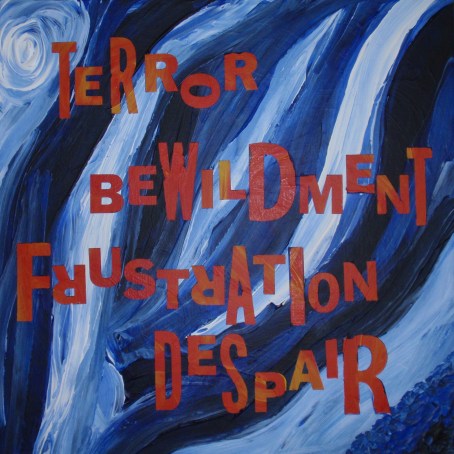
Has to be Smashed

For the past few years, maybe because I am a writer at heart, I tend to adopt themes that represent my current mindset in my recovery. (Or maybe they adopt me. Wink.) For two or three months, it feels as if most everything I am feeling or thinking somehow revolves around one central idea. Last spring, I started tossing around the idea of character development, specifically the top of page 72 in the Twelve and Twelve. The end result of that period of exploration ultimately became this blog. I realized if I am to practice principles in all my affairs then I needed to practice courage by following my dreams.

Lately though, my mind keeps returning to the idea of denial. This has not only been reflected in the choices of those close to me in the program, but choices by my family members, and indeed with myself. The power of the human mind to forget, ignore, rationalize, justify, and delude is astonishing. One some level, I think it might be one of the most fascinatingly interesting aspects of the alcoholic mind. How do we not see? Or if we see, how do we ignore?

While speaking with a friend last week, I had one of those oddly random memory flashbacks to my drinking days. It occurred perhaps ten years ago, not long after I had moved from Boston to Houston. I was at a local sports bar. Neon lights reflected in sticky veneer. Country music blared a little too loudly from a jukebox as if at any moment a rousing crowd of patrons would suddenly appear to two-step around the scattered pool tables and “Golden Tee” machine. I remember both my hands clasping a Guinness as I sobbed and hic-upped a longing to be “normal.” I remember saying it over and over again, a mantra to my alcoholism. It is one of those memories, that while tragic and tragically depressing, actually brings a hint of a smile to my lips. How ridiculous was I?

I am of the variety of alcoholic that believes I was genetically predetermined to have an acute and profound reaction to chemical brain stimulation. In addition to my predilection for alcohol, I possess a plethora of emotional and psychological baggage that will tell me at any given moment that while I may exist in this world, I am not of this world. My whole life, I have felt that I am an oddity. A tomboy with a speech impediment. An awkward teenager with a pocket full of secrets. A disillusioned adult with a drive towards escapism and obscurity. I have always been too overweight, too liberal, too outspoken. I don’t wear makeup. I do wear glasses. I shop almost exclusively at Old Navy and thrift stores and the back of Teresa P.’s closet.

The last thing I wanted added onto my list was anything even remotely close to straight edge, pious, abstemious, holy, or self-righteous. I wanted to be funny and light and awesome.

Only when I sobered up, when I stopped singularly focusing on myself, did I realize everyone is a bit weird. We all carry around a knapsack of strange and questionable qualities that help define us and differentiate us from others. What makes me abnormal is not my differences, but that my alcoholic perception tells me these differences are a negative thing.

“The delusion that we are like other people, or presently may be, has to be smashed,” (Big Book, 30). See? It’s not just the delusion that I might be able to drink like other people, but the delusion that I act, feel, or look like other people, that has to be smashed too. I can’t live my life judging myself by the actions and appearance of other people, because I’m not other people.

Every day I stay sober, I love myself just a smidge more, for I have learned it is neither the clothes nor the make-up that determine my self-worth. No, what defines me today is not what is on the outside, but what lives in my soul: service, friendship, honesty, gratitude, and love. (And maybe, just maybe, a little bit of fun, light, and awesomeness too!)


The Boy Whistling in the Dark

Last week, a friend of mine decided that after five years of sobriety that she was not an alcoholic after all, and if she just stay away from the drugs, she could successfully drink. Her friend, a girl with eighteen months, asked with all earnestness, “Why? After all these years?” I responded without much ado or forethought, “She wasn’t happy with her sobriety.” My answer came so smoothly, resounded with so much simplicity and wisdom, I surprised even me. I thought… Man, I’m goooooood.

Only later that evening, lying awake in bed, did I realize I was not the recovered guru I momentarily thought I was. All I did was reiterate one of my favorite passages in the Big Book. “We know our friend is like a boy whistling in the dark to keep up his spirits. He fools himself. Inwardly he would give anything to take half a dozen drinks and get away with them. He will presently try the old game again, for he isn’t happy about his sobriety” (Big Book, page 152).

I often refer back to the boy whistling in the dark. He has become a working part of my recovery, a part of my daily tenth step, a way to spot check my emotional sobriety. Am I, today, a girl whistling in the dark? If I could have half a dozen drinks and get away with it, would I?

Some days, the answer comes a bit slower. I have to think deeper. What does that mean, half a dozen drinks? Does that mean just once? One time, I get half a dozen drinks? What if I want seven or ten or a baker’s dozen? Do shots count? And then I have to smile. My alcoholism is so deeply rooted inside me that if I were to take half a dozen drinks, I would want more, more and more often. I know this. I’m so alcoholic that even in my hypothetical world, I am trying to nudge my way into more.

The reason I do not take half a dozen drinks has nothing to do with whether or not I would get away with it. I certainly didn’t care too much about getting into trouble when I was drinking. And I think that those closest to me can attest that sobriety has done little to damper my defiance.

For years, I wanted my brain to shut off. To be quiet. To stop the harassment that existed in my own mind. It felt like a whirlwind of hate and disgust. I used drinking to accomplish this end. Then one day, my drinking quit quieting the voices and instead added to it. My inability to exist within my own body perpetuated and exacerbated the cesspool which was my mind. With the vicious nature of this circular thinking, I find it a miracle that anyone stops drinking even for five minutes.

I do not take half a dozen drinks because I do not want to have to spend my life trying to figure out how to get the next half dozen. The question is not, could I outwit and shuck and jive my way back to inebriation, the questions is why would I ever want to? The consequence of not half a dozen drinks, but of the very first sip of the very first one, is the madness of my own mind slamming into me with the force of a bulldozer. I am confident about this. The alternative to sobriety is insanity.

So, tonight, as I lay my head down on my pillow, I will know I am not the boy whistling in the dark inwardly hoping to take half a dozen drinks. I am the girl whistling in the sunlight of the spirit as she trudges down the road of happy destinies. May God bless me and keep me until then.

13 Years and 1500 Miles

Hello, Everyone. Whenever something interesting happens in recovery, because of recovery, I always like to take a minute and recognize it. I thought I would share this story with you.

Last week, I heard friend of mine decided she was no longer an alcoholic, and as long as she stayed away from the drugs, she could successfully drink. This depth of self-deception is so common in recovery, it would be ludicrous, if it weren’t also so deadly. It’s so common, in fact, that this same friend’s first sponsor also fell victim to this delusion of drinking like a gentleman. My friend and I spent untold hours swinging on an old porch swing, smoking cigarettes against the backdrop of Houston sunsets, talking of the obsession of some to drug addicts to drink. She swore up and down that she would never forget she was an alcoholic first. And yet, just a year later, she did just that.

Some people may try to stay in contact, remain friends, with those that go back out. I have no interest in doing that. We are people who normally would not mix that find solace in our recovery. Without the recovery to talk about, I am not sure what is left. I don’t want to be friends today with any drug addict that is not trying to clean house, help others, trust God. Do what you want to do, there is no anger or hurt. I’m just not going to sign off on your behavior. Find someone else to do that.

So, I’ve lost a friend to this disease.

Then, a few days later, I was walking out the door to a local 9:30 meeting when my phone alerted me to a comment on my blog (If you click the “Shotgun Writing” tab and scroll down to the bottom, you will see it). Rebecca was my roommate when I lived in Boston. I was in a terrible place in my disease. I was envious of her. She was vibrant, and lovely, and intelligent, and amazing (And she still is). Our friendship dissolved one night when my barbed tongue spat opinions that I had no right to voice. I said things that one cannot simply take back the next day. She was hurt and angry, and I could not/cannot blame her. My behavior was atrocious.

But somehow she came across my blog. And decided to say hello. At first I was embarrassed. I have blown my anonymity all over the internet, but as soon as someone else validated it, I was uncomfortable. I have to be honest, I really wanted to delete the message. But something told me, my intuitive voice I guess, that running from the message was not what I am about today. So, I commented back. A day later, Rebecca email me. And we’ve talked every day since then. It has been amazing reuniting with someone whom I cherished when I lived in Boston.

So, that is my story. I lost one friend to this disease, but then another walked back into my life. Life works in mysterious ways. When I get down about the long odds, the heartbreak, the broken families, the erratic behavior, the poverty, institutions, insanity, and death that permeate the AA culture, I sometimes forget that families also heal, sanity is fostered, love occurs, and relationships (even those separated by 13 years and 1500 miles) are mended. As long as I stay sober, there is always a chance.


What do you Throw When you don’t know How to Cry?

Lydia tossed in bed, trying, willing herself to sleep, but every time she closed her eyes, Tuck visited her. Tuck smiling, laughing, holding her hand. Tuck in agony, crying, immovable. All she wanted was to sleep, to turn off her brain. She turned onto her back and stared at the white blankness of the ceiling. The rhythmic white noise of the respirators heightened the sense of silence and lead Lydia even further down the path of solitude.

Lydia sat up, spun around, and exasperatingly punched her flat hospital pillow. Her fist barely lifted from the pillow before it found contact again. And again. Fury suddenly filled Lydia and exploded from her body in a fit of rage. She punched because Tuck died. She punched because life was unfair. She punched because those that visited deposited their trinkets and baubles and left to go back to their hinged lives. Lydia was furious and angry and pissed off. And fucking trapped in this bed in this place with these fucking ridiculous stuffed animals and cards and flowers. Lydia grabbed a fuzzy brown bear holding a heart and viciously tore at its arms and legs. With all her might, she threw the stuffed animal across the room and barely missed the trashcan. She grabbed another one and threw it. Then another one. And then a vase of flowers.

Nightmare

The Four Horsemen Copyright Ann G. Kroger 2014

The Four Horsemen
Copyright Ann G. Kroger 2014

stars secure Tuck quiet screeching PAIN glass blood Tuck head blood more blood dripping blood sirens helicopters screaming crying Tuck arms pulling whirling strapping struggling PAIN numb quiet rocking loud fluorescent lights Chaos Chaos Chaos

Calm.

PAIN.


What do Buy when you don’t know What to Say?

People come and go from her room. First her parents, then a myriad of friends. They all bring things, flowers and balloons and stuffed animals, material things that are supposed to relate some sort of thought, but only further accentuate that no one really knows what to say.

What do you Think about When you Don’t Want to Think?

Lydia woke with a start and had a moment of confusion, disillusion, realizing she was not under the fluffy, eyelet comforter at home. And for a split second, just the most minutest of moments, she thought she was back at her friend’s shore house on Jamaica Beach. A wave of gratitude, the understanding and inkling of waking up from a nightmare began to wash over her. As the smile was just beginning to travel from her mouth to her eyes, an unfamiliar sound, the sound of whirling and a beep, followed by additional beeps caught her short. Half propped out of bed, Lydia remained motionless. To move, to turn her head, to acknowledge the machinery behind her would only confirm what Lydia could not bring herself to confirm. As long as she didn’t know, didn’t really know, maybe it didn’t happen. So she sat there, in the dark room, unable to move or to turn her head. Alone and wishing and listening.

Ricochet

Tuck pulled the black BMW out of Jamaica Beach and on to the two-lane road leading back towards Galveston. Lydia rolled down the window. She wanted to feel the warm salt air tousle her hair and kiss her face. She leaned back in the leather seat and stared through margarita eyes at the canopy of stars above. The entirety of the moment washed over her. The love of a true friend, George Strait’s soft croon of Amarillo, the smooth rhythm of the wheels on the pavement. The day of sun and the night of tequila felt like a warm blanket tucking her in. Lydia looked one last time at the stars above as she gave her body permission to drift off to sleep.

Out of tranquility, the world erupted with the pained screeching of metal against metal. Lydia was thrown forward. She slammed against the dashboard as her head careened into the windshield. Her vision exploded with fireworks. Lydia tried to raise her arms to cover her head. Pain screamed through her body. The world spun for a few more seconds then came to an abrupt and disquieting stop. Lydia took a breath and then another one. She raised her head to look around. She could taste blood in her mouth and feel glass in her hair.

Slowly, she attempted to crawl off the floorboard of the passenger side and pull herself onto the seat. Her right shoulder roared in pain. She let out a scream.

Lydia looked over at Tuck. He sat erect in his seat, his eyes partially closed. “Help me, Tuck,” Lydia whispered. Tuck’s head barely shifted as he tried to look at her.

From the glow of a nearby streetlight, Lydia could see tears running down his cheeks, “I can’t.” Lydia looked closer. In the blackness of the shadows, she could see dark liquid oozing out from Tuck head.

Forgetting her own pain, Lydia launched herself forward. She yanked her t-shirt over her head. Her shoulder made an unnatural crunch as agony careened through her body. Lydia placed her shirt against Tuck’s head. “Tuck! Oh, Tuck… Oh God… please… please… Don’t, don’t leave me.”

Her shirt slowly filled and blood began dripping down Lydia’s arm. Tuck closed his eyes. Lydia lowered her forehead against his, her tears mixing with Tuck’s blood. She could feel the heat from her words, willing him to not give up, to keep trying. A few seconds later, sirens filled the air as red and blue lights ricocheted off the interior of the car. Lydia sat there hugging Tuck. They would come for her soon enough. She just needed a few more seconds with her best friend.

Dark Waves Crash and Retreat

Lydia walked along the quiet sands of Jamaica Beach. There was a lingering stillness in the air that attracted the feeling, not of nostalgia, but that this was a moment from which nostalgia is made. From trillions of miles away, the light from the stars was just reaching earth. Dark waves crashed and retreated on the beach. Abandoned white foam yearned to be reunited with the ocean.

There is a certain sadness, Lydia thought, to perfection. People strive so laboriously to find just a single moment of peace, that when it finally comes, they are so terrified of losing it, they cannot enjoy it. Peace is the most elusive of emotions, always within sight and yet just beyond one’s fingertips. Lydia sat down on the sand and pulled her legs up close to her body. She rested her head on her kneecaps and watched as sand sifted through her long fingers. She wanted to remember this moment, remember the smallest of details, so when she would retell it in later years, she could do so with enough exactitude as to elicit winsome approval of innocence and burgeoning adulthood from her audience.

From behind her, Lydia could hear the sound of the party. It sounded far away. Not uproarious, there was no music blaring nor people screaming. Just the tinkling sound of distant conversation dispersed with mild laughter. The girls had driven out from Houston earlier in the day. They had spent most of the afternoon sunbathing and playing in the cool gulf waters. The boys arrived later in the evening and with them, a trunk load of alcohol. At first, the girls played demur, denying drinks, as the rules of the game required, but the boys were persistent and the girls eventually relented.

Lydia turned around and looked back up at the house. They all seemed to be enjoying themselves, enjoying the last hurrah before they each left for their respective colleges and universities. Lydia smiled. In the moment, they all looked so promising, so vital, so handsome.

It stuck her as odd that she would ever be considered a part of this accomplished group. She was, of course, a part of it. It was her station in life. Her friends were the children of her parent’s friends. They had been raised together, went to the same schools, joined the same gymnastics and swim teams and respective scout troops. It would be unthinkable for Lydia to not be a part of this group. And yet, she didn’t feel a part of them. To Lydia, they were all sure of themselves, secure in their place. She was just there. Never quite invited or uninvited. But it all rang untrue. All of it. As if life were somehow this massive fictitious illusion where everyone puts up with everyone else because they don’t know what else to do.

Except, somehow, for Tuck.

Lydia met Tucker the first day of kindergarten. Her father had explained to her the day before that when one meets new people, the thing to do was to stick out one’s hand and proclaim in a loud, clear voice, “My name is Lydia Wilder.”

Then the other person would say, “My name is yadda yadda. How do you do?” Several times, Lydia and her father practiced the routine. “My name is Lydia Wilder.”

So, when Lydia entered the classroom she went directly up to the teacher, stuck out her hand and proclaimed, with an air of certitude, “My name is Lydia Wilder.” To which the teacher replied, “My name is Mrs. Leigh. How do you do?”

Confident, now in her approach, Lydia looked for another person to introduce herself to. Off to the side sat a fat cheeked boy in a striped shirt and Oshkosh jeans. Lydia walked over, “My name is Lydia Wilder.”

The boy looked up at Lydia, and then shifted to look around her. “Your shoe is untied.”

Lydia continued looking down at the boy, waiting for him to introduce himself, while he continued leaning off to the side to look at the rest of the class. “Umm, Lydia? Can you sit down please?”

Lydia turned around to see if she could see what the boy was seeing. Students were filing in. Moms were crying. Kids were crying. Some were wearing Sunday’s best. Other looked like they had dressed themselves. Slowly, Lydia backed up and without taking her eyes off the show, sat down on the floor next to the unnamed boy. Lydia took her hand in his, as if it were the most normal thing in the world. He looked at her and nodded, and then both of them turned their attention back to the room in rapt concentration.

For the next twelve years, never would one see Tuck without seeing Lydia in close proximity.


“Hey, Lydia. Where did you go?”

“I just needed fresh air. Tuck, you ever get the feeling that this is the best it’s ever gonna get?”

Tuck sat down next to Lydia, put his arm around her shoulder, and drew her closer to him. “No, Lydia. This is not the best it gets. This is just the beginning.” They sat there, as they were want to do, comfortable with each other’s silence. “You wanna get out of here? Go for a drive?”

Lydia nodded her head, and together they walked off towards the car.